


-
- Global AMC MENU
- NEWS
- HEALTH
- PEOPLE
- Introduction


PDRN Derived from Salmon Significantly Improves Healing Rate by 1.8 Times When Injected into Crohn’s Disease Fistulas
Asan Medical Center Team Led by Professors Yong Sik Yoon and Jong Lyul Lee First in the World to Demonstrate the Effectiveness of PDRN in Fistula Surgery
Expected to Improve Patient Access as It Costs About 100 Times Less Than Conventional Stem Cell Therapy
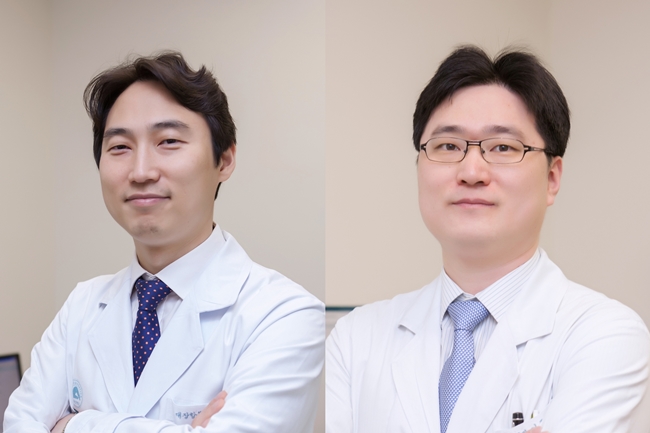
▲ (From left) Professors Yong Sik Yoon and Jong Lyul Lee of the Division of Colon and Rectal Surgery at Asan Medical Center
A new study has found that PDRN, a regenerative medicine substance extracted from salmon, may offer a highly effective treatment option for Crohn’s disease related fistulas, a common complication known for its high recurrence rate and difficulty achieving complete healing.
A research team led by Professors Yong Sik Yoon and Jong Lyul Lee of the Division of Colon and Rectal Surgery at Asan Medical Center reported that locally injecting PDRN during fistula surgery increased the healing rate of anal fistulas by approximately 1.8-fold compared with conventional surgical treatment, while also significantly shortening recovery time.
Crohn’s disease causes chronic inflammation throughout the digestive tract, from the mouth to the anus, and many patients develop fistulas as a complication. These abnormal tunnels form around the anus, causing pain and persistent discharge that can severely impair quality of life. Although stem cell therapy, with a success rate of about 70%, is currently considered the most effective treatment, its widespread use has been limited by high costs and complex manufacturing processes.
PDRN (polydeoxyribonucleotide) is a purified DNA fragment derived from salmon sperm that promotes tissue regeneration and exerts anti-inflammatory effects. Because its molecular structure closely resembles human DNA, it is associated with a low risk of adverse reactions when administered to patients. PDRN is already widely used in clinical practice for skin regeneration and scar reduction, corneal micro injury repair, and the treatment of joint and ligament injuries.
This study is the first in the world to demonstrate the effectiveness of PDRN in fistula surgery, raising expectations that it could represent a major breakthrough in the treatment of refractory Crohn’s disease fistulas.
The findings were recently published in the latest issue of Inflammatory Bowel Diseases (Impact Factor: 4.3), a leading international journal in the field of Crohn’s disease and ulcerative colitis research.
.JPG)
▲ Professor Yong Sik Yoon of the Division of Colon and Rectal Surgery at Asan Medical Center examines a patient with a Crohn’s disease-related fistula.
The research team focused on PDRN’s ability to activate adenosine A2A receptors on cell membranes, thereby suppressing inflammation, promoting new blood vessel formation, and enhancing wound healing and tissue regeneration.
Based on this mechanism, the team developed and applied a standardized technique that evenly injects PDRN around the fistula tract during surgery for Crohn’s disease related fistulas.
The research team analyzed clinical outcomes in 47 patients who underwent surgery for Crohn’s disease related fistulas at Asan Medical Center between 2018 and 2024. Patients were divided into two groups: those who received PDRN during surgery (21 patients) and those who did not (26 patients).
One year after surgery, the complete fistula closure rate was 83.3% in the PDRN group, compared with 46.2% in the non-PDRN group. This represents an approximately 1.8 fold improvement in healing outcomes.
Recovery was also significantly faster among patients treated with PDRN. The average time required to achieve complete healing was 3.3 months in the PDRN group, about 2.6 months shorter than the 5.9 months observed in the non PDRN group.
One of the greatest advantages of PDRN therapy is its affordability and convenience. Compared with conventional stem cell therapy, PDRN treatment is approximately 100 times less expensive. In addition, because it can be used as an off the shelf product without the need for a separate cell cultivation process, it has the potential to greatly improve patient access to treatment.
Professor Yong Sik Yoon of the Division of Colon and Rectal Surgery at Asan Medical Center said, “A new therapeutic option has emerged that may help overcome the longstanding challenges of Crohn’s disease fistula treatment, namely low healing rates and high recurrence rates. PDRN is a well established and safe substance that can be applied not only during surgery but also conveniently in the outpatient setting. We expect it to improve the quality of life of patients with Crohn’s disease while also reducing their financial burden.”
ASAN MEDICAL CENTER
BROCHURE DOWNLOAD
Sharing your hope
ASAN MEDICAL CENTER
